632
CHAPTER 38
Domestic resettlement
Table 43 is an analysis of the domestic resettlement. Of the 2,504 survivors out of
3,000 patients (496 died as shown in Table 40) the very great majority, 2,059, had returned
to their own homes—the ideal solution—once these were adjusted to their disability by
the authorities concerned or privately, and only 240 who could not return home for one
reason or another, were accommodated in paraplegic settlements, hostels or homes for
the disabled (see chapter Domestic Resettlement).
Employment statistics
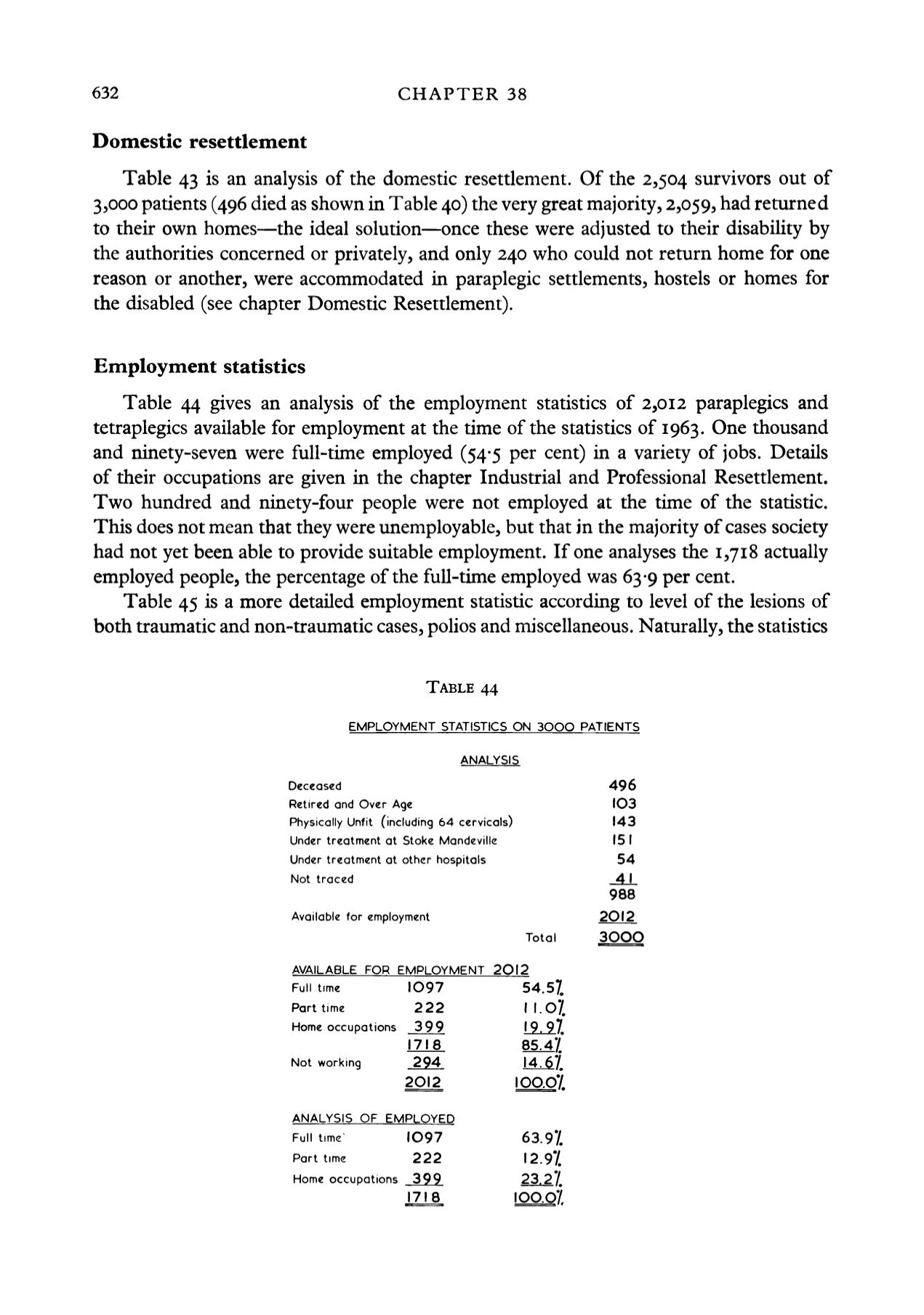
Table 44 gives an analysis of the employment statistics of 2,012 paraplegics and
tetraplegics available for employment at the time of the statistics of 1963. One thousand
and ninety-seven were full-time employed (54-5 per cent) in a variety of jobs. Details
of their occupations are given in the chapter Industrial and Professional Resettlement.
Two hundred and ninety-four people were not employed at the time of the statistic.
This does not mean that they were unemployable, but that in the majority of cases society
had not yet been able to provide suitable employment. If one analyses the 1,718 actually
employed people, the percentage of the full-time employed was 63-9 per cent.
Table 45 is a more detailed employment statistic according to level of the lesions of
both traumatic and non-traumatic cases, polios and miscellaneous. Naturally, the statistics
TABLE 44
EMPLOYMENT STATISTICS ON 3OOQ PATIENTS
ANALYSIS
Deceased
Retired and Over Age
Physically Unfit (including 64 cervicals)
Under treatment at Stoke Mandeville
Under treatment at other hospitals
Not traced
Available for employment
Total
AVAILABLE FOR EMPLOYMENT
2OI2
Full time
IO97
54.5?.
Part time
222
I I.Oj
Home occupations
399
19.97
1718
85.47*
Not working
294
14.67.
2OI2
IQO.OT.
ANALYSIS OF EMPLOYED
Full time'
IO97
Part time
222
Home occupations
399
1718


