G- GENERAL STATISTICS AND LEGAL ASPECTS
627
TABLE 37. Analysis of 3,000 cases
Servicemen and
pensioners
Civilians
Total
Percentage
Traumatic lesions
Transverse myelitis
Poliomyelitis
Vascular processes
Spina bifida
Multiple sclerosis
Disc lesions
Miscellaneous
753
34
89
n—
4i
6
66
1,000
I,2IO
125
63
95
62
80
27
338
2,OOO
I 3963
159
152
1 06
62
121
33
404
3,000
65-4
5'3
5'i
3'5
2-1
4
i • i
13-5
100-00
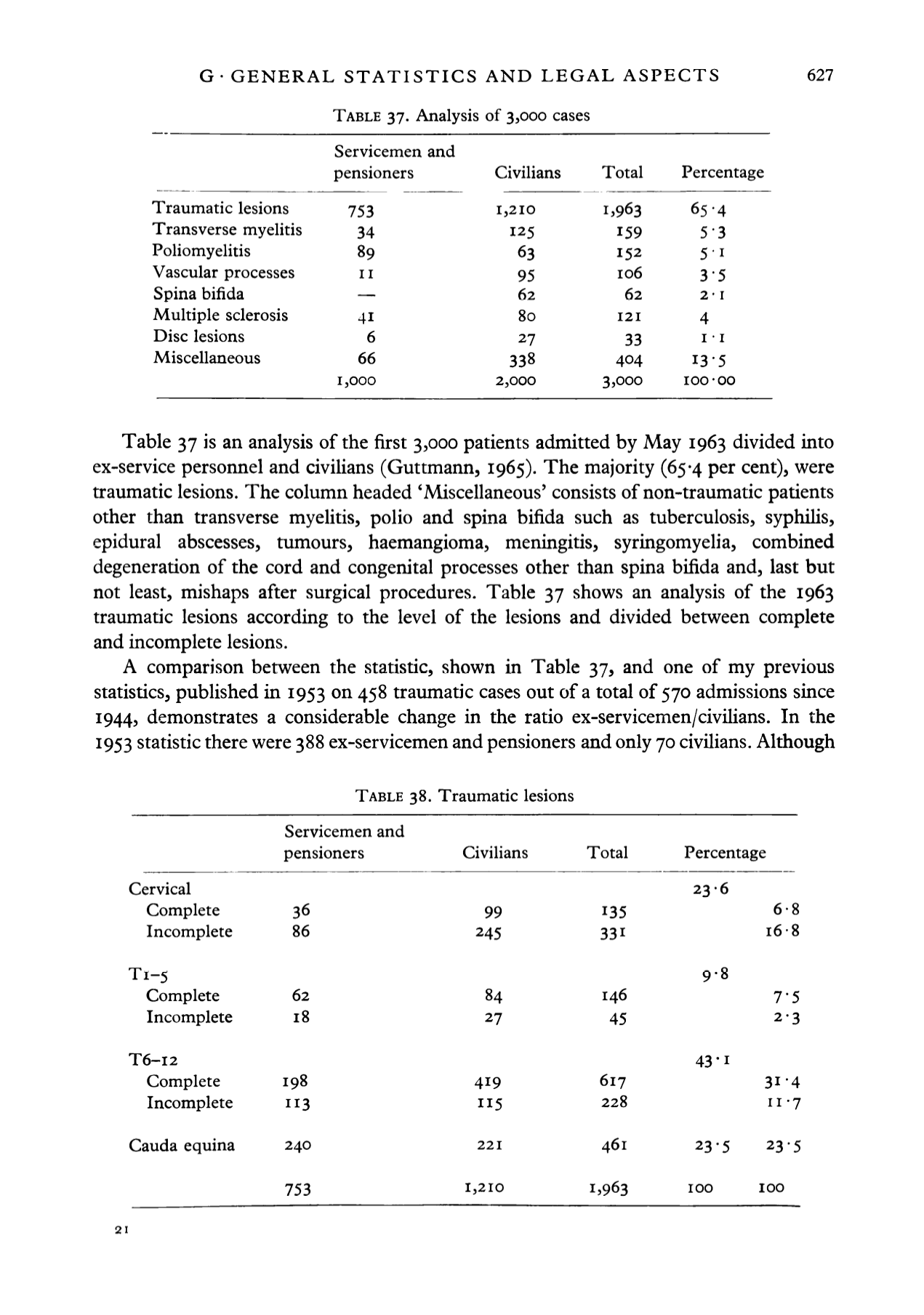
Table 37 is an analysis of the first 3,000 patients admitted by May 1963 divided into
ex-service personnel and civilians (Guttmann, 1965). The majority (65-4 per cent), were
traumatic lesions. The column headed 'Miscellaneous' consists of non-traumatic patients
other than transverse myelitis, polio and spina bifida such as tuberculosis, syphilis,
epidural abscesses,
tumours, haemangioma, meningitis, syringomyelia, combined
degeneration of the cord and congenital processes other than spina bifida and, last but
not least, mishaps after surgical procedures. Table 37 shows an analysis of the 1963
traumatic lesions according to the level of the lesions and divided between complete
and incomplete lesions.
A comparison between the statistic, shown in Table 37, and one of my previous
statistics, published in 1953 on 45$ traumatic cases out of a total of 570 admissions since
1944, demonstrates a considerable change in the ratio ex-servicemen/civilians. In the
1953 statistic there were 388 ex-servicemen and pensioners and only 70 civilians. Although
TABLE 38. Traumatic lesions
Cervical
Complete
Incomplete
Servicemen and
pensioners
36
86
Civilians
99
245
Total
135
331
Percentage
23-6
6-8
16-8
Ti-5
Complete
62
Incomplete
18
T6-I2
Complete
198
Incomplete
113
Cauda equina
240
753
84
27
419
221
I,2IO
146
45
6i 7
228
461
1,963
9-8
7'5
2-3
11-7
23-5
23-5
100
IOO
21


