190
FJ.H.
21. 9 62
CHAPTER 17
PROGRESSIVELY DEEPER BREATHS
LEADING TO A FLEXOR SPASM ——
-i
i
SM
-1
51
H S
,
i
J
xir^J.
^
•
r/i\ ra
UCOCDING
T
i
3
2 a
COPPfC'lQN 1
7 em
f—f-—[—f—f—h—(—(
SfCS.
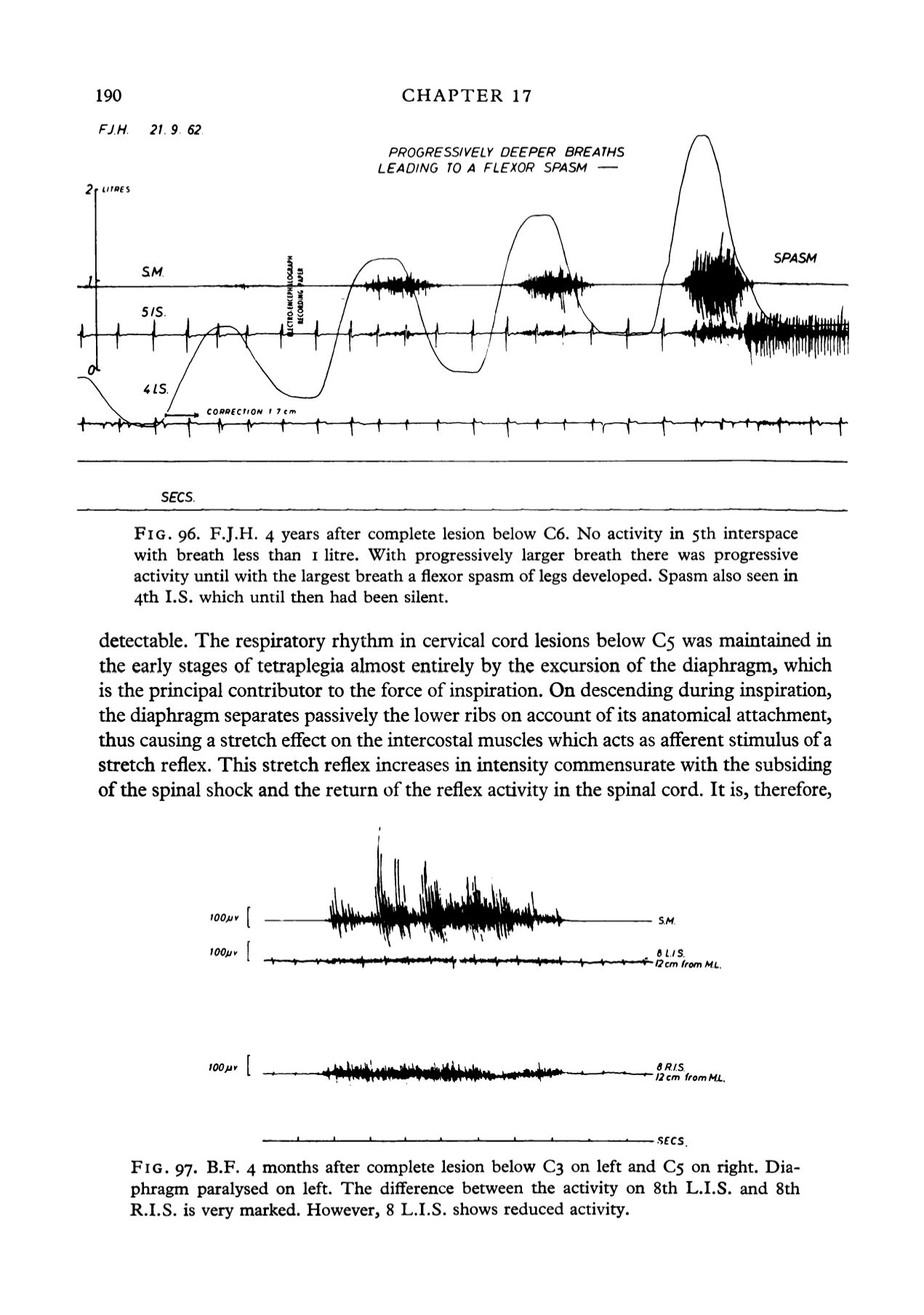
FIG. 96. FJ.H. 4 years after complete lesion below C6. No activity in 5th interspace
with breath less than i litre. With progressively larger breath there was progressive
activity until with the largest breath a flexor spasm of legs developed. Spasm also seen in
4th I.S. which until then had been silent.
detectable. The respiratory rhythm in cervical cord lesions below C5 was maintained in
the early stages of tetraplegia almost entirely by the excursion of the diaphragm, which
is the principal contributor to the force of inspiration. On descending during inspiration,
the diaphragm separates passively the lower ribs on account of its anatomical attachment,
thus causing a stretch effect on the intercostal muscles which acts as afferent stimulus of a
stretch reflex. This stretch reflex increases in intensity commensurate with the subsiding
of the spinal shock and the return of the reflex activity in the spinal cord. It is, therefore,
S.M.
dL.lS.
12cm from
ML.
tOOjir
6R./.S.
'12cm fromMj..
SECS
FIG. 97. B.F. 4 months after complete lesion below C3 on left and C5 on right. Dia
phragm paralysed on left. The difference between the activity on 8th L.I.S. and 8th
R.I.S. is very marked. However, 8 L.I.S. shows reduced activity.


