240
CHAPTER 23
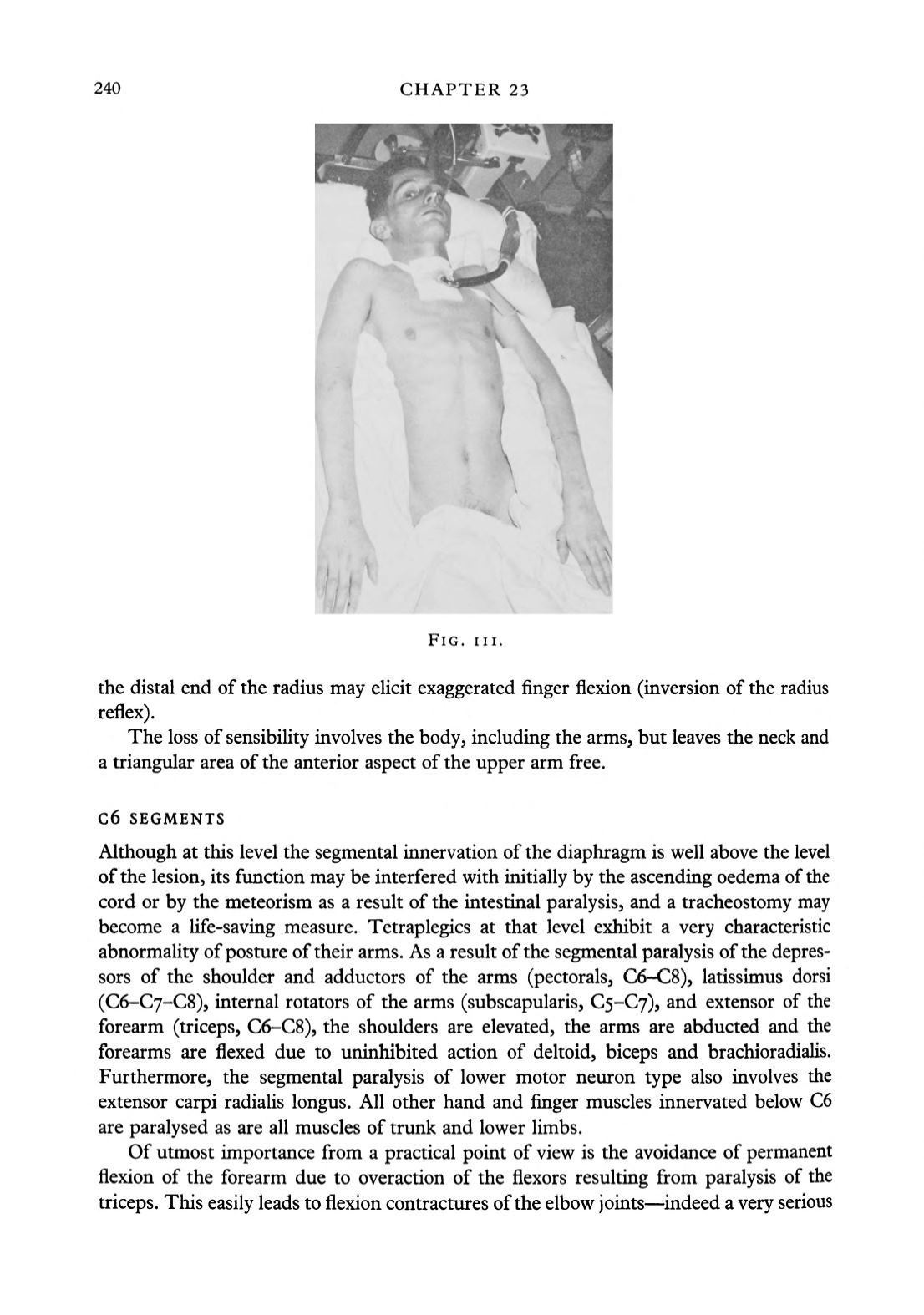
FIG. in.
the distal end of the radius may elicit exaggerated finger flexion (inversion of the radius
reflex).
The loss of sensibility involves the body, including the arms, but leaves the neck and
a triangular area of the anterior aspect of the upper arm free.
C6 SEGMENTS
Although at this level the segmental innervation of the diaphragm is well above the level
of the lesion, its function may be interfered with initially by the ascending oedema of the
cord or by the meteorism as a result of the intestinal paralysis, and a tracheostomy may
become a life-saving measure. Tetraplegics at that level exhibit a very characteristic
abnormality of posture of their arms. As a result of the segmental paralysis of the depres
sors of the shoulder and adductors of the arms (pectorals, C6-C8), latissimus dorsi
(C6-C7-C8), internal rotators of the arms (subscapularis, C5-Cy), and extensor of the
forearm (triceps, C6-C8), the shoulders are elevated, the arms are abducted and the
forearms are flexed due to uninhibited action of deltoid, biceps and brachioradialis.
Furthermore, the segmental paralysis of lower motor neuron type also involves the
extensor carpi radialis longus. All other hand and finger muscles innervated below C6
are paralysed as are all muscles of trunk and lower limbs.
Of utmost importance from a practical point of view is the avoidance of permanent
flexion of the forearm due to overaction of the flexors resulting from paralysis of the
triceps. This easily leads to flexion contractures of the elbow joints—indeed a very serious


