592
'so
fcO
CHAPTER 35
TNDIVIDURL PATTERN OF
VERTICRL
NJ
No MR?
40
ao
=
RIG-HT SIJ.E
NllxHllll IS1M<IM ISJlSlBllll ISlhJ
111 r
i
^
1
isirsiiMisi
.EFT SIDE
•«<JHI iMMi
R
R RLBT
R.
RSERR. R.
R
R
L
L. L. LflT
L.
L SERR
L
L
L
TRR? RHOHB PORSJ PECT RNT DELI Bic. TRic.
TRRP RHOTIB. DORSI PECT.
RNT. J)ELT Bic. TRIC
URT C7
RNJ>
Iffl - FULL J)RRU VERTICRL
< - M fl.T < off
M-NIo MR?
RIGHT SIDE
R RLfll R R.SEKR. R R.
RHONE PORS'I. PECT RNT. DELI Bic.
LEFT
R.
L.
TRR?
LLflT L. LSERR. L.
L.
L.
i. PECT RNT DELI Bic TRic.
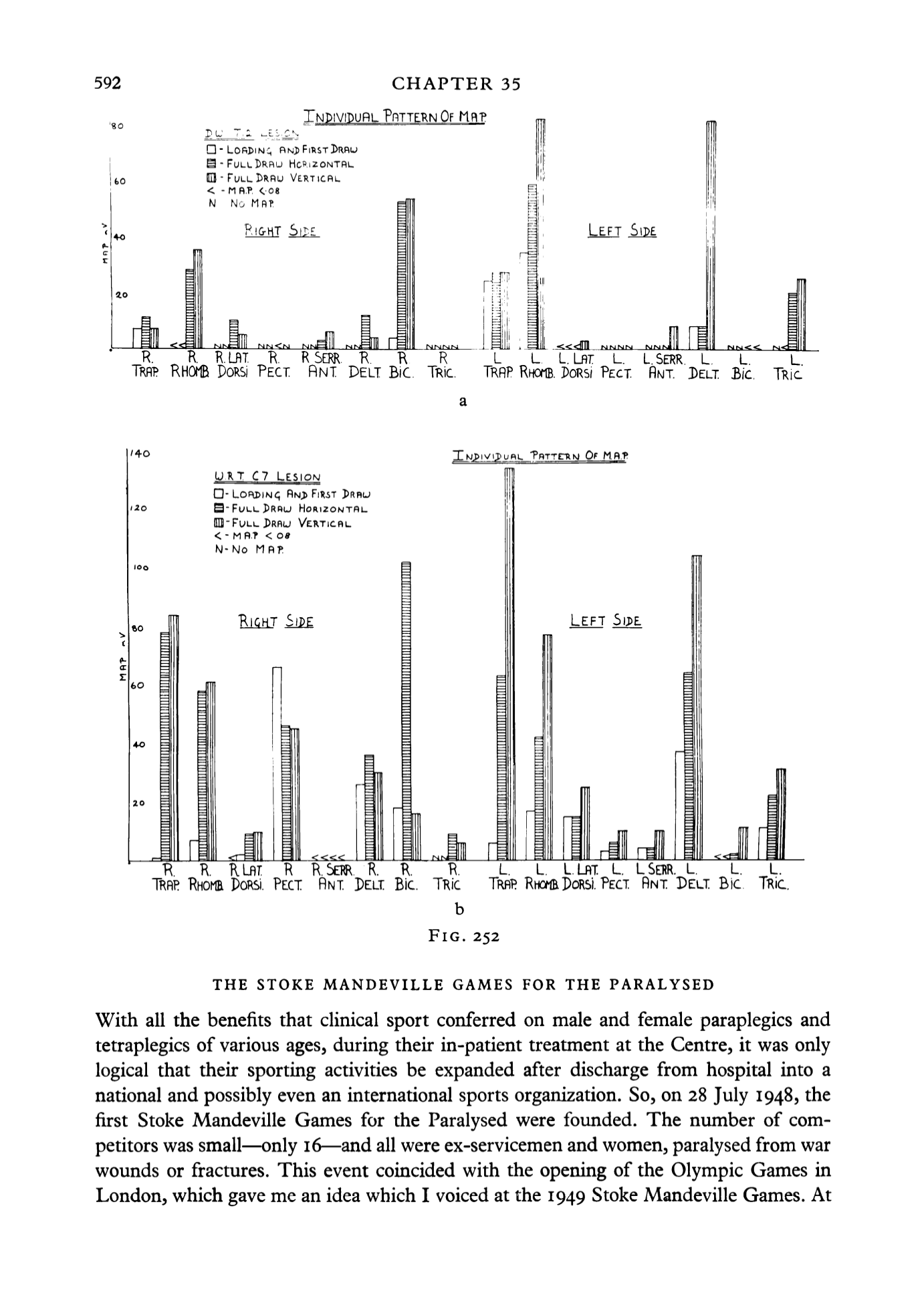
FIG. 252
THE STOKE MANDEVILLE GAMES FOR THE PARALYSED
With all the benefits that clinical sport conferred on male and female paraplegics and
tetraplegics of various ages, during their in-patient treatment at the Centre, it was only
logical that their sporting activities be expanded after discharge from hospital into a
national and possibly even an international sports organization. So, on 28 July 1948, the
first Stoke Mandeville Games for the Paralysed were founded. The number of com
petitors was small—only 16—and all were ex-servicemen and women, paralysed from war
wounds or fractures. This event coincided with the opening of the Olympic Games in
London, which gave me an idea which I voiced at the 1949 Stoke Mandeville Games. At


