F- CLINICAL ASPECTS OF SPINAL CORD INJURIES
611
activity of mind and competitive spirit and is a most important step towards the social
re-integration of paraplegics. Most of the patients have shown keen interest in pre-
vocational training, and many made tremendous efforts either to adjust their former
trades to their permanent disability or to take up training in a new occupation. It may be
noted that, in some modern Spinal Injuries Centres, such as in the Ludwig Guttmann-
Kurt Lindemann Haus at the Orthopaedic University Clinic, Heidelberg, and the Acci
dent Hospital, Murnau, theoretical and practical facilities are introduced for full industrial
training, culminating in nationally recognized examinations.
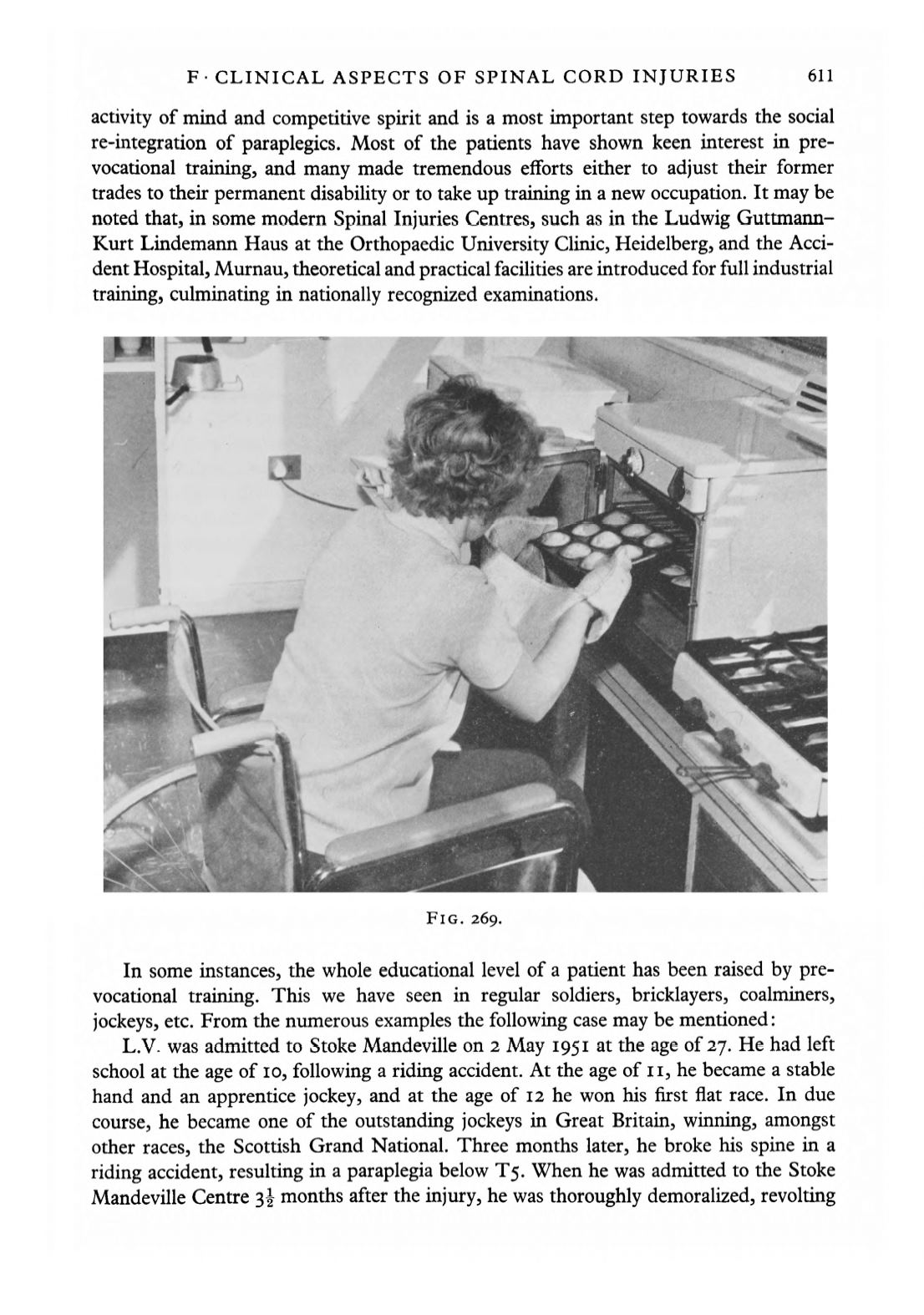
FIG. 269.
In some instances, the whole educational level of a patient has been raised by pre-
vocational training. This we have seen in regular soldiers, bricklayers, coalminers,
jockeys, etc. From the numerous examples the following case may be mentioned:
L.V. was admitted to Stoke Mandeville on 2 May 1951 at the age of 27. He had left
school at the age of 10, following a riding accident. At the age of n, he became a stable
hand and an apprentice jockey, and at the age of 12 he won his first flat race. In due
course, he became one of the outstanding jockeys in Great Britain, winning, amongst
other races, the Scottish Grand National. Three months later, he broke his spine in a
riding accident, resulting in a paraplegia below T5. When he was admitted to the Stoke
Mandeville Centre 3! months after the injury, he was thoroughly demoralized, revolting


