54
CHAPTER 7
foramen
cosfofronsversar/um
fades arlicularis superior
fovea costalis superior
fovea
cosfo/is
fransversa//s
corpus
vertebrae
lig. longitudi-
.
nale onlerius "'
disci inlerverte
lig. inlertrans-
versarium
brales
l/gamenfum cap/f/s cosfoe rod/o/um
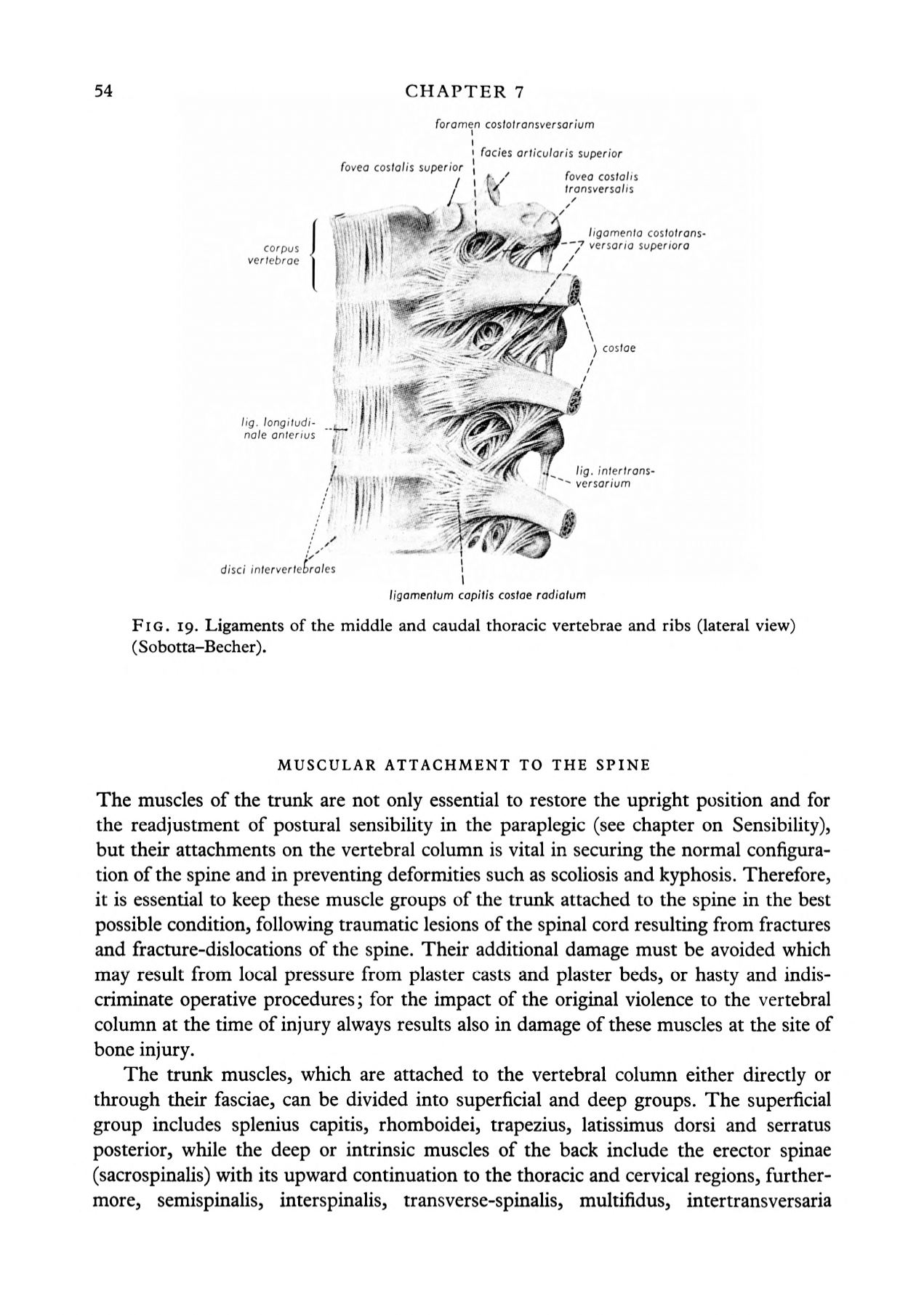
FIG. 19. Ligaments of the middle and caudal thoracic vertebrae and ribs (lateral view)
(Sobotta-Becher).
MUSCULAR ATTACHMENT TO THE SPINE
The muscles of the trunk are not only essential to restore the upright position and for
the readjustment of postural sensibility in the paraplegic (see chapter on Sensibility),
but their attachments on the vertebral column is vital in securing the normal configura–
tion of the spine and in preventing deformities such as scoliosis and kyphosis. Therefore,
it is essential to keep these muscle groups of the trunk attached to the spine in the best
possible condition, following traumatic lesions of the spinal cord resulting from fractures
and fracture-dislocations of the spine. Their additional damage must be avoided which
may result from local pressure from plaster casts and plaster beds, or hasty and indis–
criminate operative procedures; for the impact of the original violence to the vertebral
column at the time of injury always results also in damage of these muscles at the site of
bone injury.
The trunk muscles, which are attached to the vertebral column either directly or
through their fasciae, can be divided into superficial and deep groups. The superficial
group includes splenius capitis, rhomboidei, trapezius, latissimus dorsi and serratus
posterior, while the deep or intrinsic muscles of the back include the erector spinae
(sacrospinalis) with its upward continuation to the thoracic and cervical regions, further–
more, semispinalis,
interspinalis,
transverse-spinalis, multifidus,
intertransversaria


