414
CHAPTER 26
G.S. AGE
51 60
—• x'
68
64"
DIALYSIS 6 HK.
DIALYSIS 6 UK
17
21
7
9
//
/*
/f
UHAL UHIT
T/A£
- DAYS
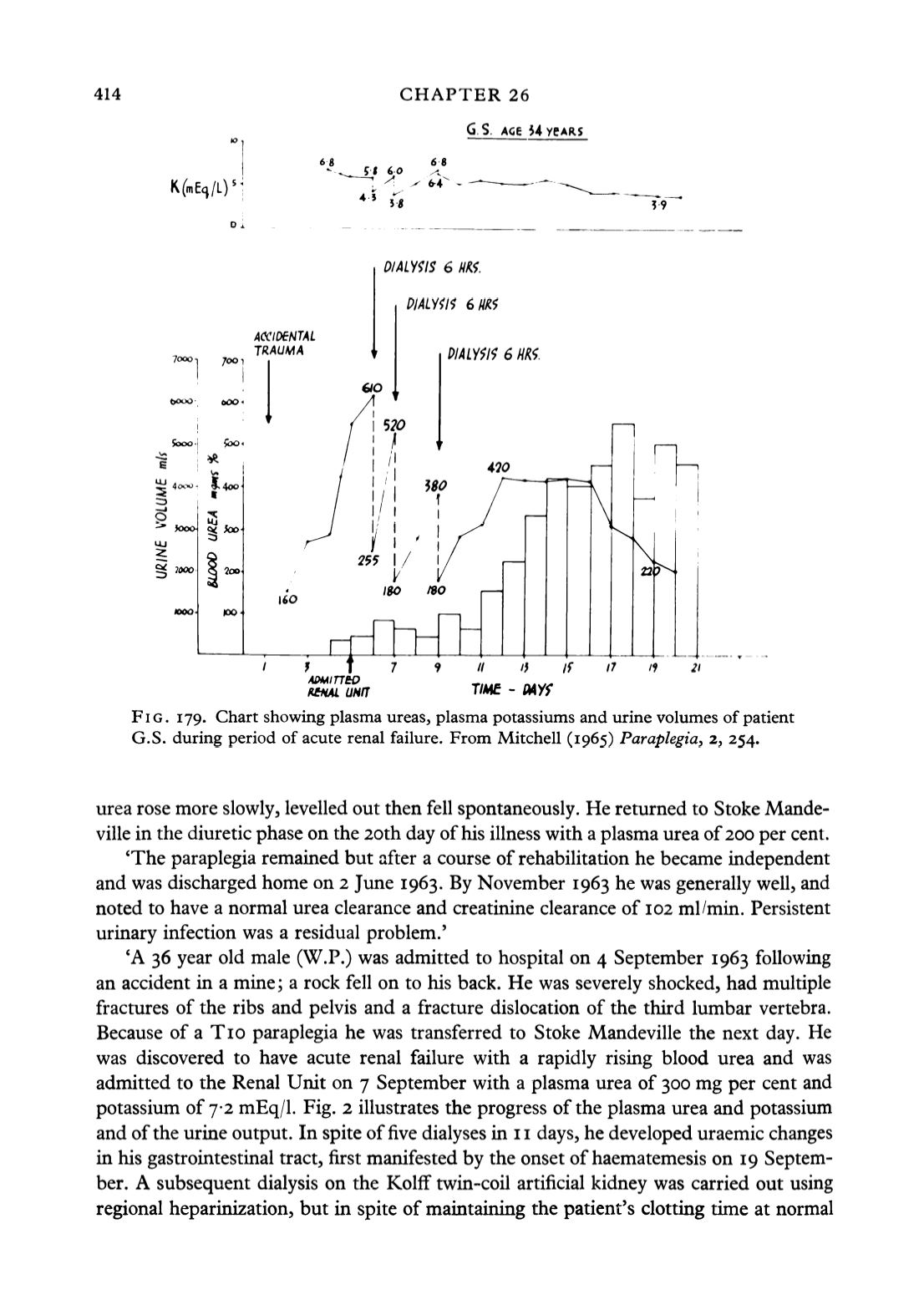
FIG. 179. Chart showing plasma ureas, plasma potassiums and urine volumes of patient
G.S.
during period of acute renal failure. From Mitchell (1965)
Paraplegia,
2, 254.
urea rose more slowly, levelled out then fell spontaneously. He returned to Stoke Mande-
ville in the diuretic phase on the 20th day of his illness with a plasma urea of 200 per cent.
'The paraplegia remained but after a course of rehabilitation he became independent
and was discharged home on 2 June 1963. By November 1963 he was generally well, and
noted to have a normal urea clearance and creatinine clearance of 102 ml/min. Persistent
urinary infection was a residual problem.'
'A 36 year old male (W.P.) was admitted to hospital on 4 September 1963 following
an accident in a mine; a rock fell on to his back. He was severely shocked, had multiple
fractures of the ribs and pelvis and a fracture dislocation of the third lumbar vertebra.
Because of a Tio paraplegia he was transferred to Stoke Mandeville the next day. He
was discovered to have acute renal failure with a rapidly rising blood urea and was
admitted to the Renal Unit on 7 September with a plasma urea of 300 mg per cent and
potassium of 7-2 mEq/1. Fig. 2 illustrates the progress of the plasma urea and potassium
and of the urine output. In spite of five dialyses in n days, he developed uraemic changes
in his gastrointestinal tract, first manifested by the onset of haematemesis on 19 Septem
ber. A subsequent dialysis on the Kolff twin-coil artificial kidney was carried out using
regional heparinization, but in spite of maintaining the patient's clotting time at normal


