418
CHAPTER 26
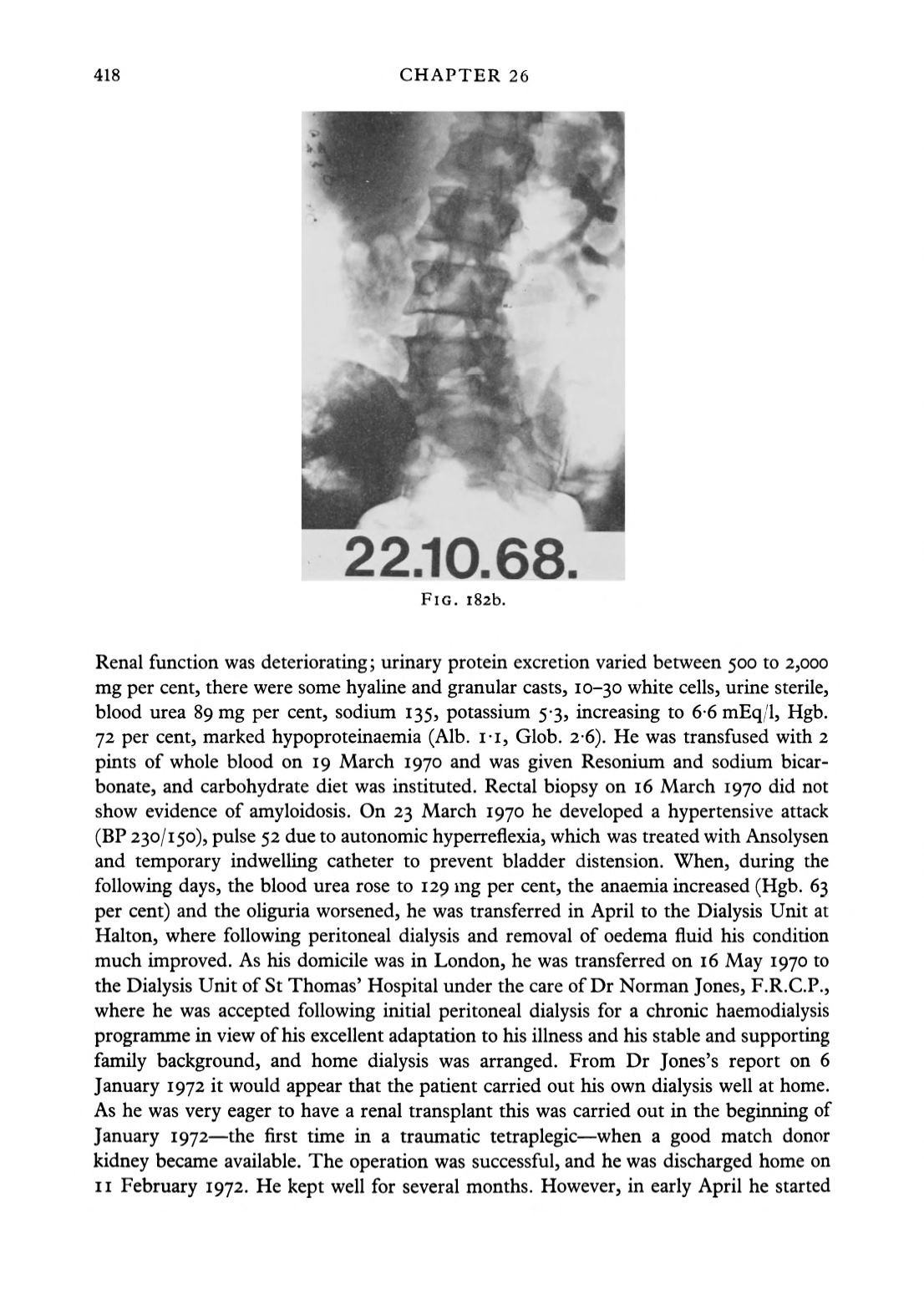
22.10.68.
FIG. i82b.
Renal function was deteriorating; urinary protein excretion varied between 500 to 2,000
mg per cent, there were some hyaline and granular casts, 10-30 white cells, urine sterile,
blood urea 89 mg per cent, sodium 135, potassium 5-3, increasing to 6-6 mEq/1, Hgb.
72 per cent, marked hypoproteinaemia (Alb. ri, Glob. 2-6). He was transfused with 2
pints of whole blood on 19 March 1970 and was given Resonium and sodium bicar
bonate, and carbohydrate diet was instituted. Rectal biopsy on 16 March 1970 did not
show evidence of amyloidosis. On 23 March 1970 he developed a hypertensive attack
(BP 230/150), pulse 52 due to autonomic hyperreflexia, which was treated with Ansolysen
and temporary indwelling catheter to prevent bladder distension. When, during the
following days, the blood urea rose to 129 mg per cent, the anaemia increased (Hgb. 63
per cent) and the oliguria worsened, he was transferred in April to the Dialysis Unit at
Halton, where following peritoneal dialysis and removal of oedema fluid his condition
much improved. As his domicile was in London, he was transferred on 16 May 1970 to
the Dialysis Unit of St Thomas' Hospital under the care of Dr Norman Jones, F.R.C.P.,
where he was accepted following initial peritoneal dialysis for a chronic haemodialysis
programme in view of his excellent adaptation to his illness and his stable and supporting
family background, and home dialysis was arranged. From Dr Jones's report on 6
January 1972 it would appear that the patient carried out his own dialysis well at home.
As he was very eager to have a renal transplant this was carried out in the beginning of
January 1972—the first time in a traumatic tetraplegic—when a good match donor
kidney became available. The operation was successful, and he was discharged home on
ii February 1972. He kept well for several months. However, in early April he started


