416
CHAPTER 26
Acute renal failure in chronic renal insufficiency
There is general agreement amongst all workers in the field of spinal cord afflictions that,
in spite of the advances made in the treatment of these patients during the last 25 years
or so, the prevention or early management of chronic renal deficiency resulting from
ascending infection of the urinary tract still leaves much to be desired. Although it is
recognized that certain chronic renal diseases carry a worse prognosis than others, ascend
ing infection of the urinary tract, including pyelonephritis, should be considered as one of
the potentially reversible causes of renal insufficiency. Long experience in this field has
shown, without any doubt, that paraplegics as well as tetraplegics, in spite of chronic
infection leading to renal deficiency, not only can remain alive, but indeed lead a life
worthwhile living for many years, which only 25 years ago would have seemed impossible.
Therefore their expectancy for an active and useful life could still be vastly prolonged, if
all the modern therapeutic facilities of recent years including dialysis treatment could be
employed for them in good time. There is still reluctance amongst some nephrologists
in charge of Dialysis Units to give paraplegics suffering from chronic renal deficiency,
including those employed, an equal chance for dialysis treatment, including home dialysis,
with non-paraplegics suffering from this calamity, on the grounds that it is a hopeless
task—a defeatist attitude which prevailed 25 years ago towards the treatment of para
plegics generally. Therefore, consideration should be given to the inclusion of dialysis
facilities in the larger Spinal Centres, if there is not a Dialysis Unit in the immediate
neighbourhood.
12.3.54.
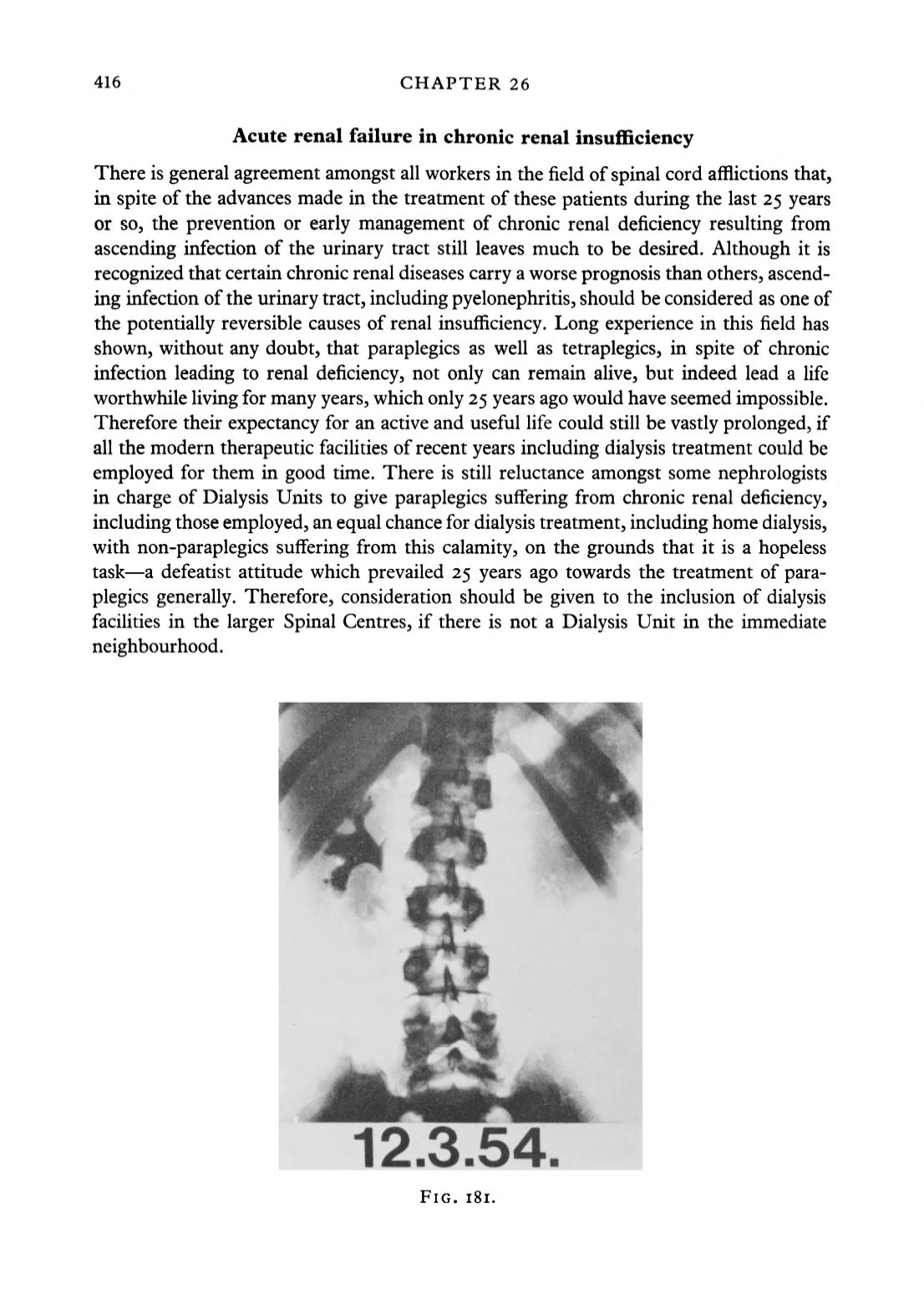
FIG. 181.


