E • COMPLICATIONS
205
which increases calcium and phosphate absorption from the intestine and promotes
calcification by direct action on bone. As soon as the paraplegic is up in his wheelchair,
intensive physiotherapy, including standing and, in particular, sportive activities have
been invaluable in combating osteoporosis.
DIAGNOSIS AND TREATMENT OF PATHOLOGICAL FRACTURES
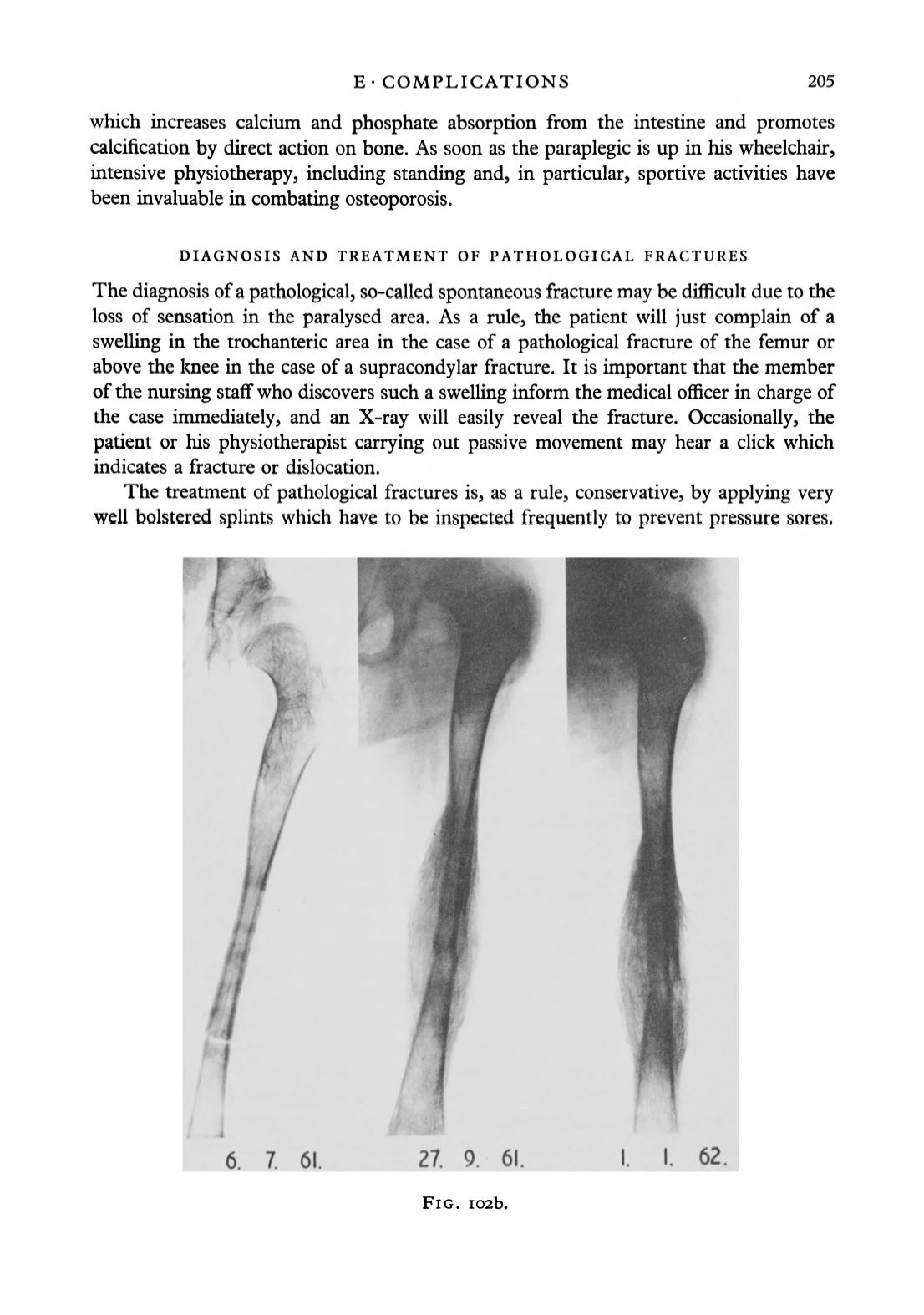
The diagnosis of a pathological, so-called spontaneous fracture may be difficult due to the
loss of sensation in the paralysed area. As a rule, the patient will just complain of a
swelling in the trochanteric area in the case of a pathological fracture of the femur or
above the knee in the case of a supracondylar fracture. It is important that the member
of the nursing staff who discovers such a swelling inform the medical officer in charge of
the case immediately, and an X-ray will easily reveal the fracture. Occasionally, the
patient or his physiotherapist carrying out passive movement may hear a click which
indicates a fracture or dislocation.
The treatment of pathological fractures is, as a rule, conservative, by applying very
well bolstered splints which have to be inspected frequently to prevent pressure sores.
6.
7.
61.
27.
9.
61.
FIG. io2b.
i.
62.


