F- CLINICAL ASPECTS OF SPINAL CORD INJURIES
301
stages of the test in a complete lesion below T3/4 is demonstrated in Fig. 1313. While in
the early stage of the sweat test, using the Quinizarin dye method, there was rapid and
profuse sweating over face, neck, shoulders, upper limbs and upper chest (supra-
lesionary hyperhidrosis), there was anhidrosis below that level which corresponded
closely to the level of the sensory loss. However, in the final stage of increased heat
stimulation, sweating occurred well below the sensory level tapering down and gradually
diminishing in intensity to Tio dermatome. The particularly profuse sweating over the
areas of compensatory hyperhidrosis mentioned during the initial stage is still visible
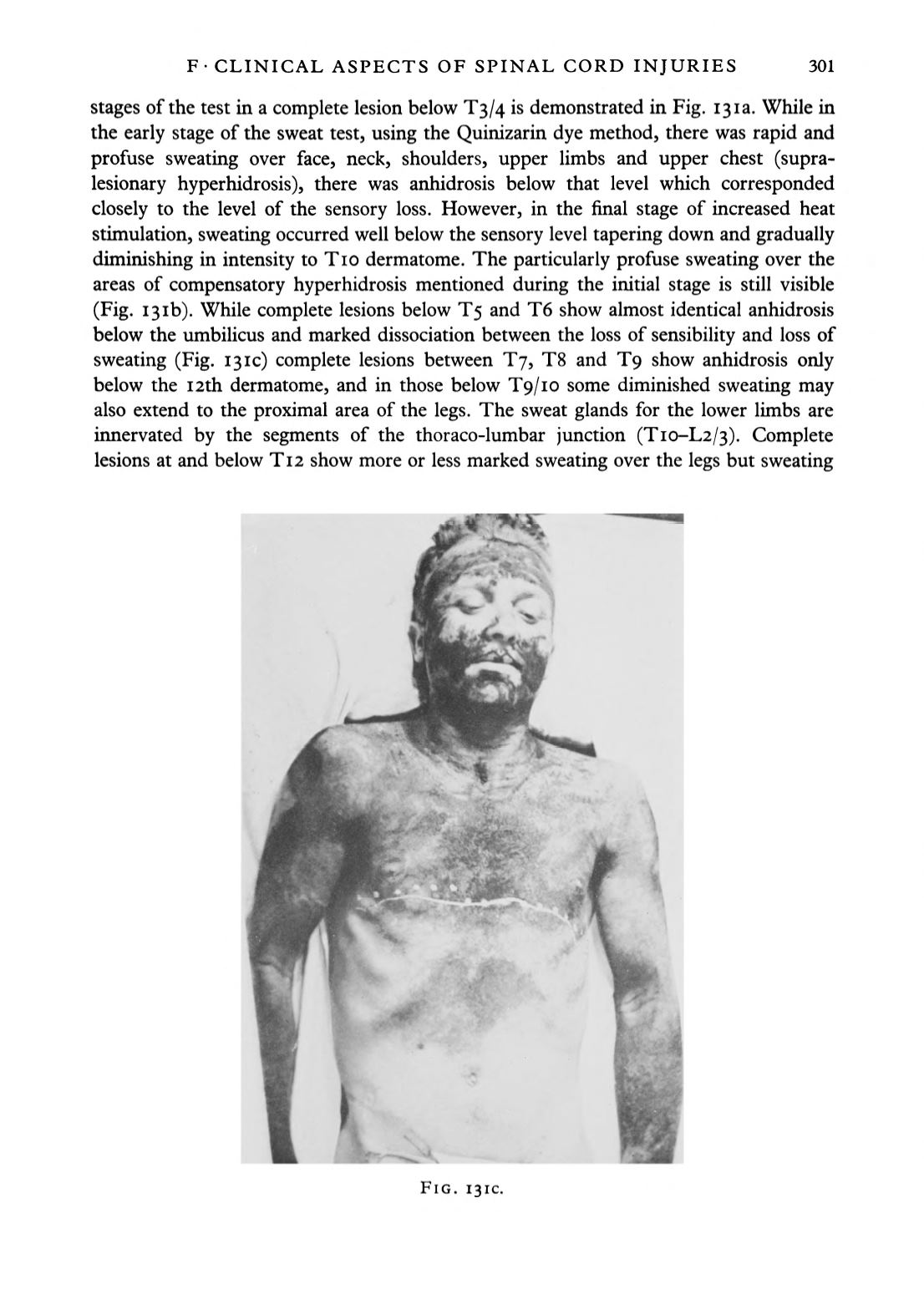
(Fig. I3ib). While complete lesions below T5 and T6 show almost identical anhidrosis
below the umbilicus and marked dissociation between the loss of sensibility and loss of
sweating (Fig. I3ic) complete lesions between Ty, T8 and T9 show anhidrosis only
below the I2th dermatome, and in those below T9/io some diminished sweating may
also extend to the proximal area of the legs. The sweat glands for the lower limbs are
innervated by the segments of the thoraco-lumbar junction (Tio-L,2/3). Complete
lesions at and below Ti2 show more or less marked sweating over the legs but sweating
FIG. 1310.


