F- CLINICAL ASPECTS OF SPINAL CORD INJURIES
571
Abnormal gait patterns in spinal cord and cauda equina lesions
The spastic gait.
The spastic gait is subject to considerable variation, according to the
degree of pyramidal tract lesion, and in certain cases to the associated lower motor neuron
involvement in both complete and incomplete transverse spinal syndromes. The main
characteristic of the spastic gait is loss of the essential element in human locomotion,
namely alternating stepping. Normally, while the standing leg supports the body, the
other is flexed at hip and knee, raised from the ground, swung forward, and placed in a
suitable position to receive and carry the weight of the body. In the severely spastic gait,
the flexion phase is more or less abolished, and the legs are rigid in extension and adduc-
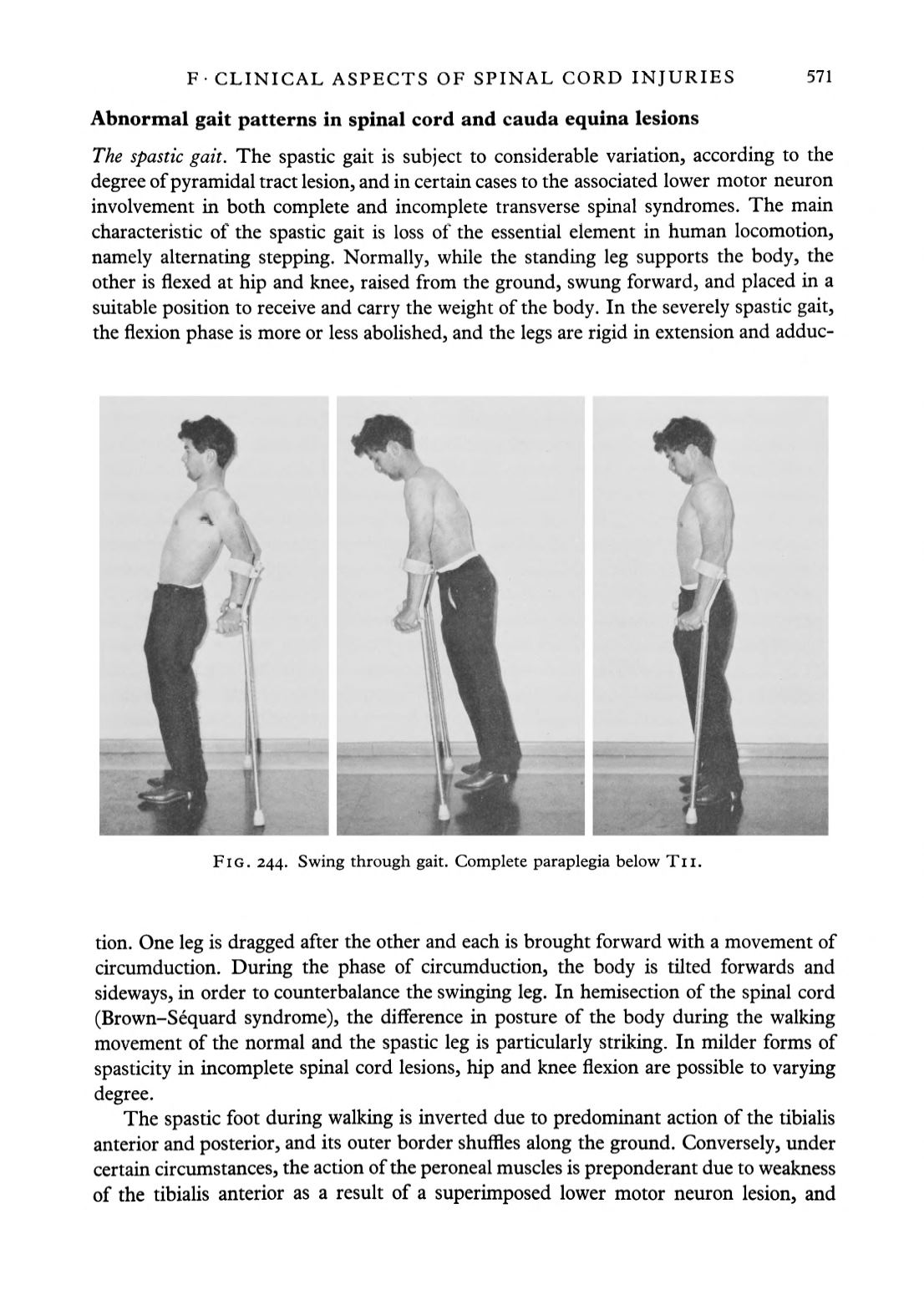
FIG. 244. Swing through gait. Complete paraplegia below Tn,
tion. One leg is dragged after the other and each is brought forward with a movement of
circumduction. During the phase of circumduction, the body is tilted forwards and
sideways, in order to counterbalance the swinging leg. In hemisection of the spinal cord
(Brown-Sequard syndrome), the difference in posture of the body during the walking
movement of the normal and the spastic leg is particularly striking. In milder forms of
spasticity in incomplete spinal cord lesions, hip and knee flexion are possible to varying
degree.
The spastic foot during walking is inverted due to predominant action of the tibialis
anterior and posterior, and its outer border shuffles along the ground. Conversely, under
certain circumstances, the action of the peroneal muscles is preponderant due to weakness
of the tibialis anterior as a result of a superimposed lower motor neuron lesion, and


