286
37
H 35
HI
I 33
Q.
2
31
CHAPTER 25
C7 lesion, cooling
27° C
18-20C
i
~o Rectum A_
^t~*~
C7 lesion, heating
--"*'-"* Toe
--o--2 Chose above
''--»"
lesion
A-
Side
--"'
• Chest below
lesion
35-37 C
1
2
Time
(hr)
1
2
Time
(hr)
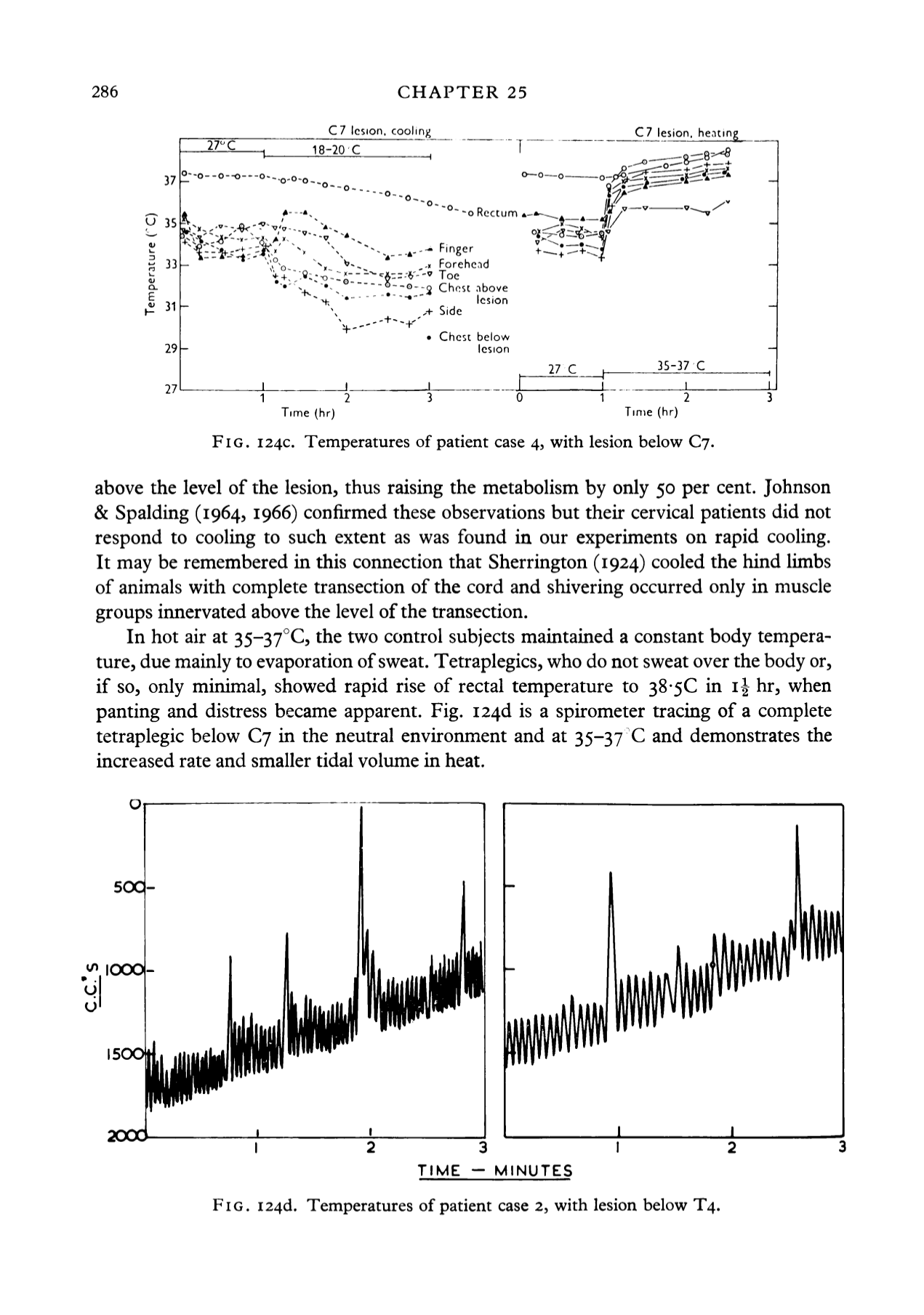
FIG. 1240. Temperatures of patient case 4, with lesion below Cy.
above the level of the lesion, thus raising the metabolism by only 50 per cent. Johnson
& Spalding (1964, 1966) confirmed these observations but their cervical patients did not
respond to cooling to such extent as was found in our experiments on rapid cooling.
It may be remembered in this connection that Sherrington (1924) cooled the hind limbs
of animals with complete transection of the cord and shivering occurred only in muscle
groups innervated above the level of the transection.
In hot air at 35-37°C, the two control subjects maintained a constant body tempera
ture, due mainly to evaporation of sweat. Tetraplegics, who do not sweat over the body or,
if so, only minimal, showed rapid rise of rectal temperature to 38-50 in i^ hr, when
panting and distress became apparent. Fig. I24d is a spirometer tracing of a complete
tetraplegic below
Cj
in the neutral environment and at 35-37 C and demonstrates the
increased rate and smaller tidal volume in heat.
TIME — MINUTES
FIG. I24d. Temperatures of patient case 2, with lesion below T4.


