80
CHAPTER 8
and so was the loss of pain and temperature sensibility on the left side up to C2. In
contrast to the previous case there were no disturbances of posterior column sensibility.
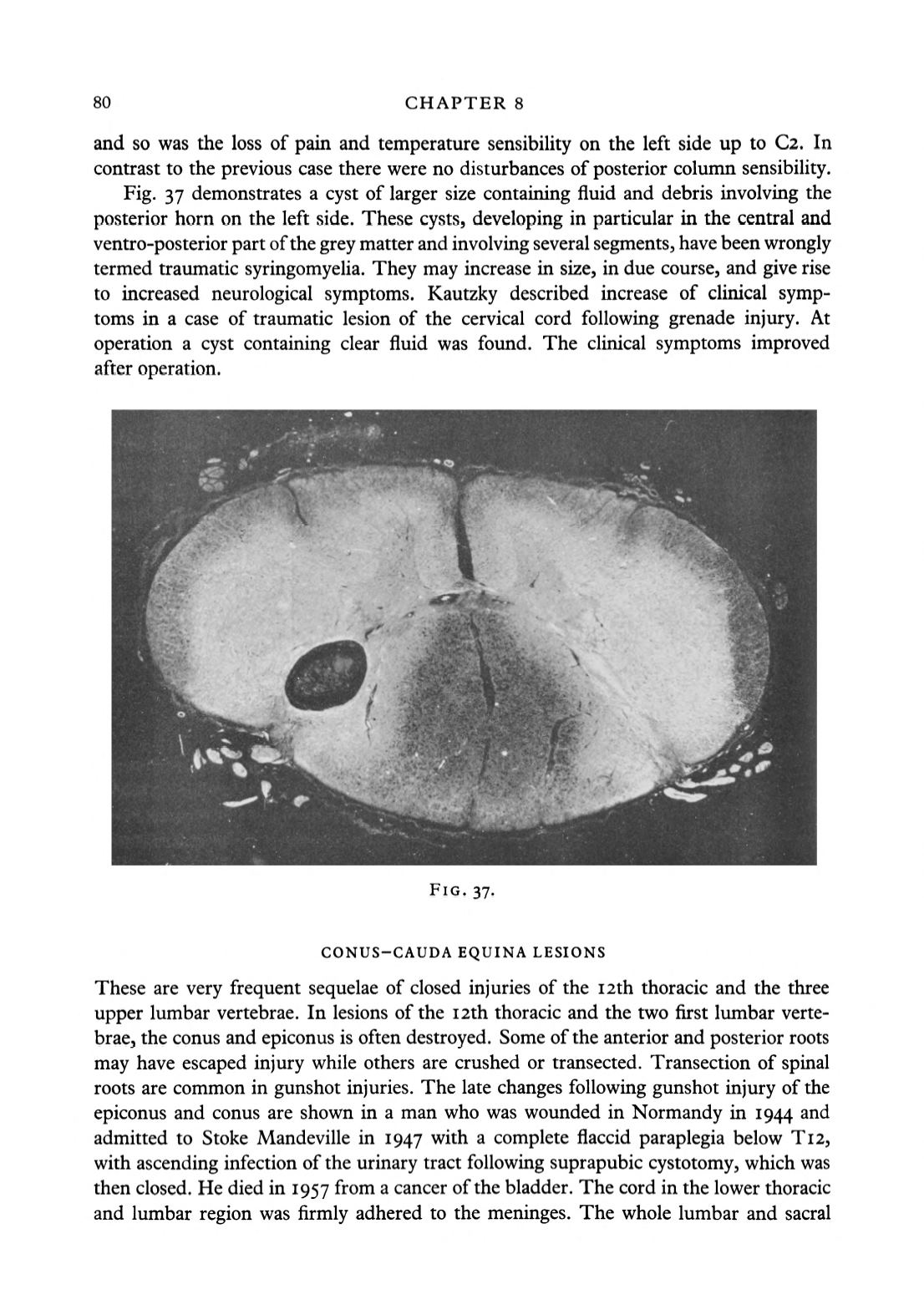
Fig. 37 demonstrates a cyst of larger size containing fluid and debris involving the
posterior horn on the left side. These cysts, developing in particular in the central and
ventro-posterior part of the grey matter and involving several segments, have been wrongly
termed traumatic syringomyelia. They may increase in size, in due course, and give rise
to increased neurological symptoms. Kautzky described increase of clinical symp–
toms in a case of traumatic lesion of the cervical cord following grenade injury. At
operation a cyst containing clear fluid was found. The clinical symptoms improved
after operation.
FIG. 37.
CONUS-CAUDA EQUINA LESIONS
These are very frequent sequelae of closed injuries of the I2th thoracic and the three
upper lumbar vertebrae. In lesions of the I2th thoracic and the two first lumbar verte–
brae, the conus and epiconus is often destroyed. Some of the anterior and posterior roots
may have escaped injury while others are crushed or transected. Transection of spinal
roots are common in gunshot injuries. The late changes following gunshot injury of the
epiconus and conus are shown in a man who was wounded in Normandy in 1944 anc^
admitted to Stoke Mandeville in 1947 w^tn a complete flaccid paraplegia below Ti2,
with ascending infection of the urinary tract following suprapubic cystotomy, which was
then closed. He died in 1957 from a cancer of the bladder. The cord in the lower thoracic
and lumbar region was firmly adhered to the meninges. The whole lumbar and sacral


